-
Cúrsaí
Cúrsaí
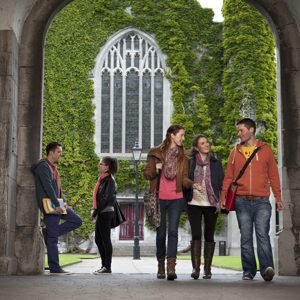
Tá roghnú cúrsa léinn ar cheann de na cinntí is tábhachtaí dá ndéanfaidh tú choíche! Féach na cúrsaí atá againn anseo agus an méid a deir mic léinn agus léachtóirí faoi na cúrsaí sin a bhfuil spéis agatsa iontu.
-
Saol na hOllscoile

Saol na hOllscoile
Chuile bhliain roghnaíonn os cionn 4,000 duine Ollscoil na Gaillimhe mar chéad rogha. Faigh amach faoin saol in Ollscoil na Gaillimhe anseo.
-
Eolas Fúinn
Eolas faoi Ollscoil na Gaillimhe
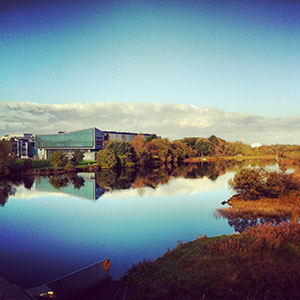
Bí ar an eolas faoin Ollscoil seo agus na fáthanna a bhfuil sí chomh speisialta sin – an stair thar a bheith spéisiúil a bhaineann leis an Ollscoil agus an nuacht is déanaí agus na hócáidí atá ar na bacáin.
-
Coláistí & Scoileanna
Coláistí & Scoileanna
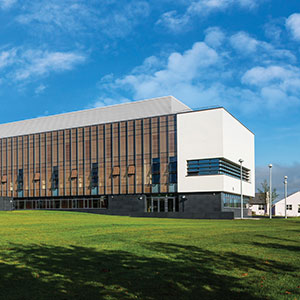
Tá aitheantas idirnáisiúnta bainte amach ag Ollscoil na Gaillimhe mar ollscoil atá á treorú ag an taighde agus rún daingean aici teagasc den chéad scoth a chur ar fáil i réimsí éagsúla saineolais.
-
Taighde
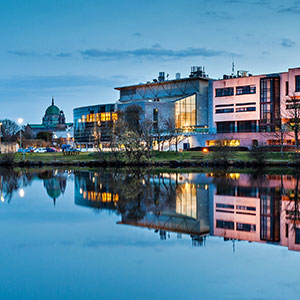
Nithe Fónta á gCruthú as Smaointe Úra
Tugann ár dtaighdeoirí aghaidh ar chuid de na dúshláin is práinní san 21ú Céad.
-
Gnó & Tionscal
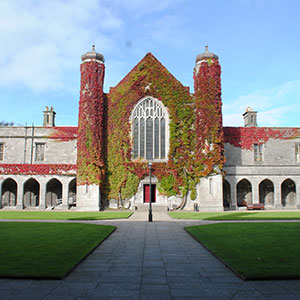
Tacaíocht do Thaighde Úrnua in Ollscoil na Gaillimhe
Déanaimid deiseanna tráchtála a chuardach agus a chothú don phobal taighde in Ollscoil na Gaillimhe, mar aon le comhpháirtíocht tionsclaíochta a chothú.
-
Alumni, Cairde & Lucht Tacaíochta
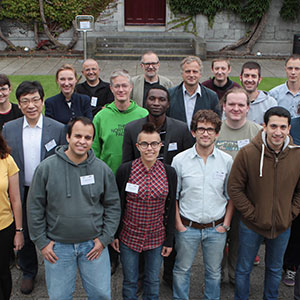
Alumni, Cairde & Lucht Tacaíochta
Tá os cionn 90,000 céimí de chuid Ollscoil na Gaillimhe ann ar fud an domhain. Déan nasc linn agus beidh teacht agat ar an gcomhphobal sin ar líne.
-
Rannpháirtíocht Pobail
Rannpháirtíocht sa Phobal
In Ollscoil na Gaillimhe, creidimid go n-éireoidh níos fearr leat más féidir leat an méid a fhoghlaimíonn tú a chur i bhfeidhm i do shaol féin. Is mar gheall air sin go bhfuil béim mhór ar shocrúcháin oibre nó ar thionscadail phobail i gcuid mhór dár gcúrsaí.








Folúntais

Agallaimh
- Má bhíonn aon cheist agat, seol ríomhphost chuig recruit@universityofgalway.ie.
- Coinnigh súil ar an láithreán gréasáin agus ar na meáin shóisialta don scéal is deireanaí - www.universityofgalway.ie/alert
Is féidir le foireann reatha folúntais inmheánacha a fheiceáil trí logáil isteach ar Fhéinseirbhís d’Fhostaithe
Search Job Categories
Friday, 27 Nov 2026
Fully Funded PhD Scholarship: Understanding and scaling community-based nature conservation and restoration in Ireland (RINN Energy Centre, Ryan Institute and School of Geography, Archaeology
Application(s) are invited from suitably qualified candidates for full-time funded PhD scholarship(s) starting in January 2027 affiliated to the RINN Energy Centre, Ryan Institute and School of Geography, Archaeology and Irish Studies at the University of Galway.
University of Galway
Located in the vibrant cultural city of Galway in the west of Ireland, the University of Galway has a distinguished reputation for teaching and research excellence. This PhD opportunity has been co-funded by the National Parks and Wildlife Service and University of Galway and will be housed in the RINN Energy Centre and School of Geography, Archeology and Irish Studies.
For information on moving to Ireland please see www.euraxess.ie
Detailed Project Description
How can communities become the driving force behind nature restoration, biodiversity conservation and a just transition to a more sustainable future?
This exciting PhD opportunity will explore the transformative potential of community-led conservation and restoration, examining how local knowledge, collective action and community empowerment can contribute to addressing the interconnected challenges of biodiversity loss, climate change and just energy transitions.
Drawing on the experience and expertise of existing Natura Communities, alongside emerging communities as the initiative expands, the research will examine how community-led approaches become established, what environmental and social outcomes they generate, and how they can be successfully developed and scaled across new communities, landscapes and habitat types. Working with existing groups provides a rich source of practical knowledge about what enables locally embedded conservation, while the expansion of the initiative across the island of Ireland and Scotland offers a unique opportunity to examine how this learning can be adapted and applied in new settings.
The research will be structured around three interconnected questions, with each stage building on the findings of the previous one. In doing so, the project will generate knowledge that directly informs the future development of the Natura Communities network while contributing to wider academic and policy debates on community-based conservation, environmental governance and just energy transitions.
Questions could include:
- What is the current state of community-led conservation and restoration, in Ireland, Northern Ireland, Scotland and internationally, and what makes these approaches locally embedded?
- How can a locally embedded community conservation model be successfully scaled to new communities, landscapes and habitat types?
- How can the ecological, social and economic outcomes of community-led restoration be understood, evaluated and used to support future scaling?
Taken together, the research will move from understanding the existing Natura Communities model, through examining its expansion under the Shared Island Initiative and other funding sources, to developing an evidence-based framework for future scaling. This will allow the PhD to contribute not only to evaluation of Natura Communities but to the wider question of how locally rooted conservation initiatives can grow without losing the relationships, knowledge and sense of ownership that underpin their effectiveness.
The research questions and methodological approach will be refined by the successful candidate in collaboration with the supervisory team and project partners during the early stages of the PhD. The successful candidate will be expected to undertake their PhD by publication, i.e. the thesis will take an article-based form. The candidate will also be responsible for some practical project management and coordination, thus providing an opportunity for gaining hands-on experience and application of their skills and knowledge.
Living allowance (Stipend): €25,000 per annum
University fees: €5750 (excluding student levy of €140) per annum covered by the funding
Start date: January 1st 2027
Academic Entry Requirements:
Essential Criteria
- A minimum 2:1 honours primary degree, or a master's, in a relevant field such as geography, science, environmental policy, environmental science or a related discipline
- Demonstrated interest in the relationship between people, communities and the environment
- Strong qualitative research skills
- Excellent written and spoken communication and proficiency in English
- Willingness to give presentations at national and international events, including at internal organisational meetings
- Willingness to travel across the Island of Ireland, potentially Scotland, and undertake fieldwork in rural and remote areas
- Willingness to organise and Chair meetings for the Shared Island Fund Natura Communities project, record and circulate minutes
- Previous project management and coordination experience, a capacity to work independently and to coordinate projects with both academic and applied elements.
To Apply for the Scholarship:
Please send a copy of your CV (Max 5 pages) and a cover note (max 2 pages) outlining your suitability for the role to Dr Kathy Reilly, Kathy.reilly@universityofgalway.ie before Friday, 11th of December 2026.
Primary Supervisor name: Professor Frances Fahy (Ryan Institute and RINN Energy), Dr Gary Goggins (NPWS) and Dr Kathy Reilly (Geography, University of Galway).
Closing Date: Friday, 11 Dec 2026
Application: PHD GSO 025-26
Sorry, there are currently no jobs available in the selected category. Please come back later.
View internal jobs in the staff intranet.
Ríomhphost
Aon cheist? Email recruit@universityofgalway.ie

Córas Féinseirbhíse na bhFostaithe
Cliceáil anseo chun folúntais inmheánacha a fheiceáil ar ESS